
The Trade Union Congress of Nigeria has urged the Federal Government to raise workers’ salaries immediately, saying relief from worsening economic hardship should not depend on the conclusion of another minimum wage negotiation.
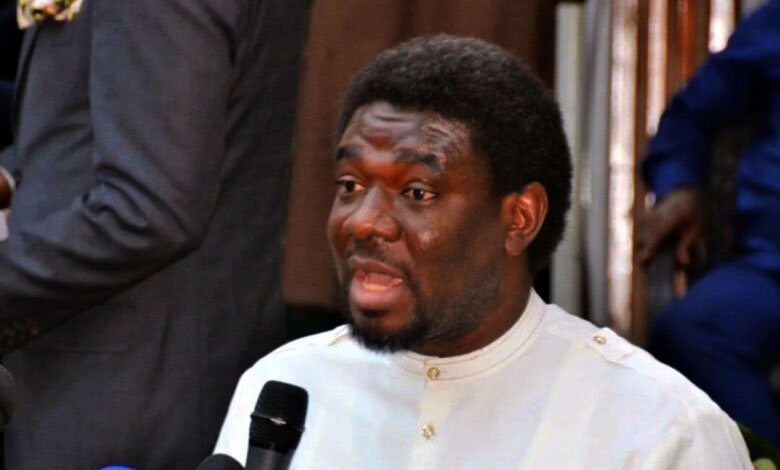
TUC President, Festus Osifo, made the demand while briefing journalists after the congress’ National Administrative Council meeting, where he also outlined preparations for fresh wage talks.
Osifo said the minimum wage represented the lowest permissible payment, not a ceiling on what governments and private employers could pay.
“We have mentioned several times that allowances do not need a minimum wage conversation. And even salaries, the government on its own can actually push the salaries of workers up, even without a minimum wage conversation,” he said.
He noted that employees in banking, food and beverages, and oil and gas already earn substantially above the statutory threshold, adding that the Federal Government could improve remuneration without waiting for new legislation.
Osifo particularly urged immediate support for workers on the lower levels of the federal payroll, whose earnings had come under severe pressure.
“Government does not even need to wait for a new minimum wage Act to be signed before government will take care of its workers,” he said.
The TUC president proposed establishing a negotiating committee in February 2027, about six months before what he described as the August 2027 expiry of the current agreement.
He said the previous negotiations took three to four months, so an early start is necessary to avoid delays.
“So, if the committee can be inaugurated in February, we can start work, so that by the end of May or June, we could have a new minimum wage,” he said.
Addressing the unresolved dispute involving the Joint Health Sector Unions, Osifo urged the Federal Ministry of Health to settle outstanding commitments contained in the communiqué that led to the suspension of the union’s strike.
He said the congress would write to the minister to draw attention to the agreement and allow a few days to respond.
Osifo added that TUC was consulting its sister labour centre, warning that both centres would intervene if the latest engagement failed to resolve the issues.
On insecurity, he demanded increased funding and stronger action against kidnappings and killings, which he said were disrupting agriculture, discouraging investment and weakening economic activity.
He urged the government to prioritise the protection of lives and property, saying Nigerians must be alive and secure to benefit from infrastructure and other public projects.
The labour leader also described the naira as undervalued and called on the Central Bank of Nigeria to strengthen the currency.
He argued that an improved exchange rate would reduce pressure on fuel, food and other products whose costs were linked to foreign exchange.
Osifo further called for the revival of the textile industry, citing high energy and production costs, job losses and declining employment.
He urged the Ministry of Labour to enforce decent working conditions and tackle excessive casualisation, inadequate pay and unsafe workplaces.
Ahead of the 2027 general elections, the TUC president called on the Independent National Electoral Commission to deliver a transparent, open and credible electoral process.