
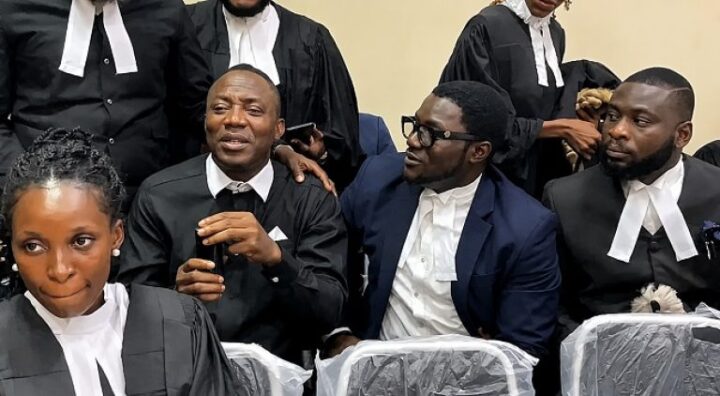
The Federal High Court has fixed October 6, 2026, to rule on whether State Security Service (SSS) Director-General Mr Oluwatosin Ajayi must personally testify as a defence witness in the trial of Omoyele Sowore.

Justice Mohammed Umar adjourned the matter after prosecution and defence lawyers presented opposing arguments at Friday’s proceedings.
Prosecuting counsel Akinlolu Kehinde, SAN, argued that an appropriate SSS official could comply with the subpoena issued to the director-general.
He cited a Supreme Court decision which, according to his submission, recognised that a subpoena addressed to a named public officer did not invariably require that officer’s personal attendance.
Kehinde said the Attorney-General of the Federation had advanced the same position during proceedings on July 28, 2026.
He told the court that the parties subsequently agreed that the SSS could nominate an official to testify for its director-general.
According to the prosecution, the nominated official was present in court and ready to give evidence.
Kehinde said that Ajayi acted in an official capacity and had no personal interest in the case.
He also said requiring the SSS chief to attend every proceeding involving the agency would be impracticable.
He maintained that the court, rather than the defence, should determine whether another competent official could testify.
Defence counsel Adeyinka Olumide-Fusika, SAN, disagreed, arguing that the prosecution had undermined the earlier arrangement by allegedly failing to present the designated official at the previous hearing.
He said the subpoena and hearing notice named Ajayi, so they required his personal appearance.
Olumide-Fusika explained that the defence sought the director-general’s testimony after its second witness, SSS official Uwem Davies, repeatedly said only Ajayi could answer certain questions.
The court reserved its ruling on the competing submissions until October 6.
Sowore is facing allegations of cyberbullying arising from posts published on X and Facebook in August 2025 in which he described President Bola Tinubu as a “criminal” and accused him of misrepresenting the extent of corruption in Nigeria.