

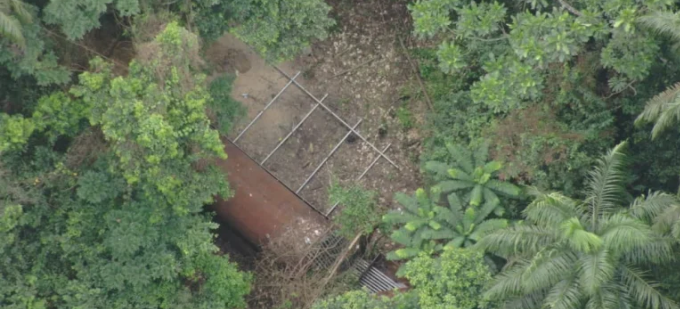
The Nigerian Navy has uncovered an illegal refinery with a reported capacity of 40,000 litres in Bonny Local Government Area of Rivers State, and has arrested three suspects allegedly connected to its financing.

The operation followed intelligence supplied through the Joint Intelligence Monitoring Team, which brings together personnel from security and intelligence agencies.
Briefing journalists in Bonny, the Commanding Officer of the Navy’s Forward Operating Base, Captain Stanley Umeh, described the discovery as the largest operation undertaken by his team since he assumed command in March 2026.
Umeh said operatives travelled into the creeks aboard Navy gunboats before trekking through dense vegetation to reach the site.
He attributed the discovery to sustained cooperation between the Navy and other security agencies operating within and outside Bonny.
He said unlike facilities where stolen crude oil had already been stored or processed, the refinery was still being prepared for operation.
Umeh said its scale suggested it was intended for substantial crude oil theft and illegal refining. He pledged stronger patrols and surveillance across Bonny’s waterways and remote locations.
The Head of Investigation of the Special Prosecution Team of the Inter-Agency Task Force on Petroleum Theft, Omar John Sini, said the operation prevented the facility from becoming fully operational.
Sini said the three suspects allegedly invested millions of naira in establishing the refinery and would face prosecution after investigations and the required legal procedures.
He added that the task force had approached the court for orders concerning the facility.
According to Sini, intelligence from the Joint Intelligence Monitoring Team, led by Major General A.A. Idris under the supervision of the Chief of Defence Staff, enabled operatives to locate the site.
He said the task force, inaugurated on March 1, 2025, had secured at least 137 convictions for offences in the petroleum sector.
Sini called for tougher penalties for petroleum theft, arguing that existing sanctions might not sufficiently discourage offenders.