
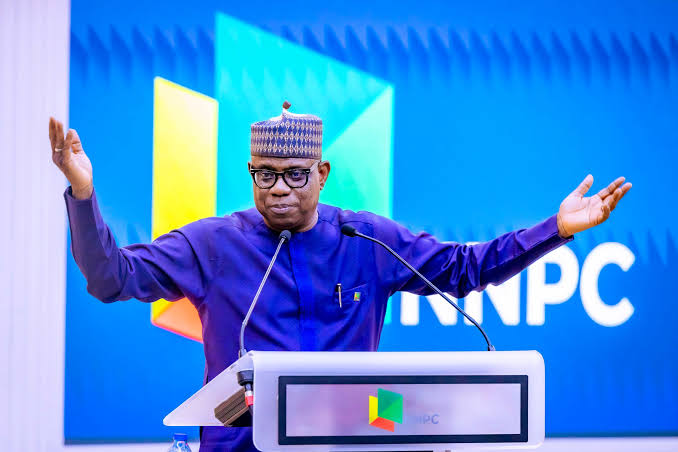
On Thursday, January 23, 2026, Mr Wael Sawan, Chief Executive Officer of Shell Companies Nigeria, and the Group Chief Executive Officer of NNPC Limited, Bashir Bayo Ojulari, were at the Presidential Villa in Abuja. The immediate context was the visit of Shell’s global chairman to Bola Ahmed Tinubu— his first formal engagement with Nigeria’s President since the release of targeted executive orders aimed at strengthening investment incentives in the energy sector. That visit, the NNPC chief explained, was a corporate leader coming in person to say thank you for decisions that had moved from policy papers into real investment flows.
Following the enactment of the Petroleum Industry Act (PIA), Nigeria discovered, as Ojulari put it, that legislation alone was not enough. Capital today is mobile, impatient and constantly courted. Countries across Africa, the Americas and Asia are revising fiscal terms, regulatory timelines and approval processes at speed. Against that background, President Tinubu’s executive orders, issued early last year, were designed to add practical incentives that respond to how investors actually make decisions.
According to the NNPC GCEO, those orders sent an unmistakable signal that Nigeria was prepared to compete.
The results, he said, were visible within eighteen months. First came the successful completion of Shell’s onshore divestment to Renaissance. Beyond the transaction itself, its significance lay in what it demonstrated to the global investment community that Nigeria respects entry and exit. In a world where portfolio rebalancing is constant, the ability to invest and, when necessary, disengage without policy uncertainty is as important as profitability. Completing that deal reinforced confidence that Nigeria’s regulatory environment had matured.
With that assurance in place, Shell moved decisively. The company reached Final Investment Decision on Bonga North, committing approximately $5 billion to deepwater development. Soon after, another FID followed — about $2 billion for a shallow-water gas project known internally as HI. In concrete terms, Ojulari noted, a single international oil company had committed more than $7 billion since the President’s incentive framework took effect.
Yet the most forward-looking signal came during the same presidential meeting. Shell indicated its readiness to pursue up to $20 billion in additional opportunities over the coming years. This was not framed as goodwill but as confidence rooted in what the company described as leadership that could be “touched and felt:” transparency, consistency and visible commitment from the very top.
Among the projects already under active engagement is Bonga Southwest, a development with capital expenditure approaching $10 billion, alongside decades of operating expenditure.
For Ojulari, these figures translate into reopened fabrication yards that have sat idle for years, into welders, engineers, marine crews and logistics firms returning to steady work, and into Nigerian suppliers re-entering global value chains from which prolonged project droughts had excluded them.
He was careful to stress the long horizon. A deepwater project does not simply create construction jobs; it sustains employment and services for twenty to thirty years. Maintenance contracts, materials supply, offshore support and technical services form a living ecosystem that extends well beyond initial capital spend. In that sense, each Final Investment Decision is also a social and industrial decision.
Within this unfolding vista, NNPC’s role, Ojulari said, is commercial and custodial. As the concession holder in Nigeria’s production-sharing contracts with partners such as Shell, Chevron, ExxonMobil and TotalEnergies, the national oil company must work across government to design solutions that are commercially sound and nationally responsible. He described NNPC as the “conscience of government and Nigerians” in the oil and gas space, tasked with validating assumptions, interrogating promises and ensuring that agreements reflect reality.
The meeting was ultimately about Shell, but its implications were broader. It illustrated how decisive leadership can restore credibility, how policy certainty can unlock stalled capital and how Nigeria, once again, is being spoken of in global boardrooms as a destination worth betting on. The gratitude expressed to President Tinubu, Ojulari said, was for accessibility, openness and personal engagement, qualities that, in a world of mobile capital, can tip the balance between hesitation and commitment.
As Nigeria positions itself for the next cycle of offshore and gas development, the story emerging from the State House is of investments already underway, yards preparing to reopen, and a sector slowly regaining its place on the global energy map.

Abdullahi Mohammed writes from Abuja.