

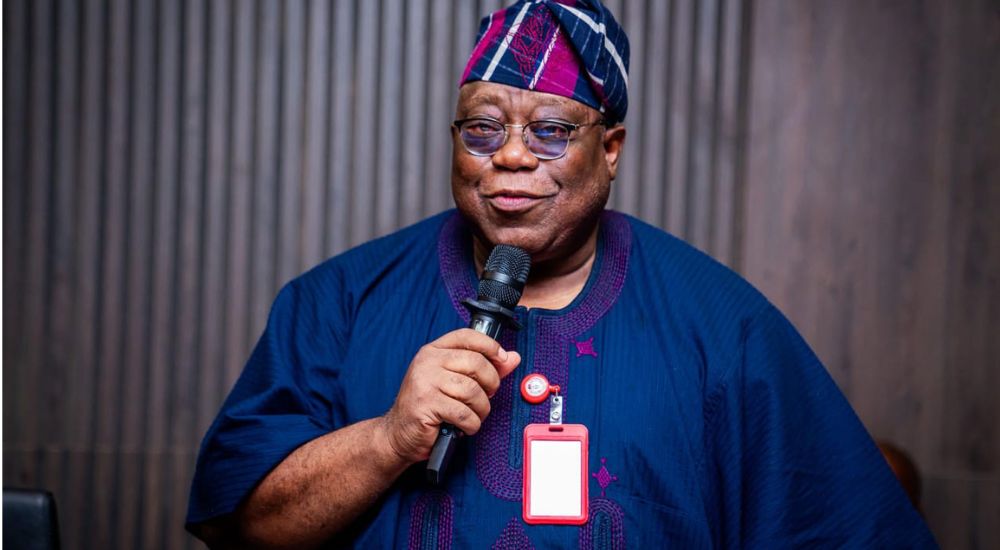
The chairman of the Federal Civil Service Commission (FCSC), Mr Tunji Olaopa, has warned that prolonged employment embargoes within Nigeria’s public service are steadily eroding institutional capacity, weakening merit-based recruitment and driving skilled professionals out of government service.
Speaking on the second day of the International Civil Service Conference (ICSC) 2026 organised by the Office of the Head of the Civil Service of the Federation under the theme, “Reforms, Resilience and Results,” Olaopa called for urgent reforms in recruitment policy to reposition the civil service as a competitive and efficient institution.
Delivering a presentation titled, “Guidance, Merit and Digital Reform: Rewiring the Federal Civil Service,” the FCSC chairman argued that years of hiring restrictions have transformed employment from a strategic governance instrument into a major institutional bottleneck.
According to him, the inability of government to recruit regularly has weakened workforce planning, reduced institutional memoryand made it increasingly difficult for the public service to attract and retain talented professionals.
“I think a situation where we are doing embargo for so long has made the service lose the value of using employment as a tool for recruiting the service,” he said.
He lamented the growing migration of skilled civil servants to the private sector and foreign countries after receiving training within the public service system.
“Good people will come into the public service, they will get the initial training and they will move into other sectors. The rate at which we are losing them, even to the diaspora, is incredible,” he said.
The FCSC chairman stressed that the federal government must urgently restore the civil service as an employer of choice through innovative recruitment policies, competitive remuneration, and improved working conditions.
“For government to restore its status as an employer of choice, we need to bring a lot of innovation into employment policies. Whatever we do with merit and competitiveness, if we do not resolve the competitive wage issue and commensurate conditions of service as drivers of merit, we are just playing to the gallery,” he said.
He maintained that recruitment should no longer be viewed merely as a fiscal burden but as a strategic instrument for strengthening governance, filling critical manpower gaps, sustaining institutional continuity and improving service delivery.
He said that prolonged embargoes have significantly reduced the ability of the civil service to adapt to evolving public needs despite the availability of qualified and willing professionals.
The FCSC chairman also linked sustainable recruitment reform to digital transformation within the public service, insisting that government institutions must move away from cumbersome manual systems toward interoperable digital databases, online recruitment platforms and integrated personnel management systems.
According to him, digital reforms would not only improve transparency and efficiency but also make recruitment processes more accessible, accountable and merit-driven.
He said that performance evaluation within the civil service must evolve beyond paper qualifications and routine credential assessments to measurable competence, productivity, and tangible results.
He emphasised that merit-based recruitment cannot succeed in an environment where remuneration and welfare remain uncompetitive, stressing that the public service would continue losing trained manpower if officers are not adequately rewarded for their expertise and contributions.
He also called for stronger professionalism, accountability, and transparency within the Federal Civil Service Commission and the broader public service structure.
According to him, appointments into strategic institutions must be guided by competence, integrity and proven experience rather than political patronage or personal connections.
Olaopa warned that unless deliberate reforms are undertaken to restructure incentives, modernise recruitment systems, and strengthen workforce retention, the Nigerian civil service could remain trapped in a cycle of declining productivity and persistent manpower shortages.