

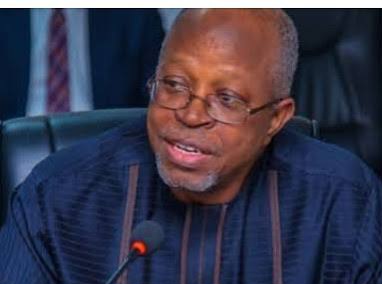
The pioneer Chairman of the Federal Capital Territory (FCT) Civil Service Commission, Mr Emeka Eze, has disclosed how the introduction of computer-based testing (CBT) and strict resistance to external influence dismantled long-standing patronage and promotion without merit within the FCT civil service.
Eze spoke during a panel session on the second day of the 2026 International Civil Service Conference (ICSC) organised by the Office of the Head of the Civil Service of the Federation in Abuja.
He explained that before the reforms, promotions within the system were often driven by influence and personal connections rather than competence and measurable performance.
According to him, the Commission decided to institutionalise transparent examinations and merit-driven processes despite intense opposition from vested interests within and outside the service.
He revealed that during the Commission’s first CBT recruitment exercise for 60 residency training positions, more than 174,000 applications were received, yet only six candidates passed the examination.
“Strangely enough, out of the applications we could only get six people. We were looking for 60 people and we got only six. There was no pressure that was not brought to bear and I said no, I must follow the rules. If you don’t pass, you don’t pass,” he said.
He said the transparency built into the CBT process made manipulation almost impossible because candidates could immediately view their scores after completing the examination.
He recalled the fierce resistance that greeted the Commission’s decision to subject over 8,000 officers to CBT promotion examinations.
“For the first time, I must tell you that the FCT Commission played the trick in adopting CBT for promotion. Across the entire FCT, there was hot water. At one point, people were saying: ‘Chairman must go!
“I said everybody must go and sit for exam. They said if we have not been sitting for exam—I said if you have not been sitting for exam, this time you must sit for exam,” he said.
Despite the pressure mounted by various interests, Eze disclosed that the Minister of the Federal Capital Territory, Nyesom Wike, never interfered with the process.
“Luckily for me, the minister never interfered. He never for one day called me to say, ‘How about this person?’ Never,” he said.
He narrated how he rejected attempts by influential individuals to manipulate scores in favour of preferred candidates, insisting that only those who met the required standards would be promoted.
According to him, the deployment of technology and consistency in enforcing rules helped neutralise entrenched patronage networks within the system.
“Introducing technology, being consistent, helped me in withstanding the pressure that was associated with the system,” he said.
He disclosed that the Commission has now fully automated parts of its promotion and confirmation processes, enabling successful officers to download confirmation letters online immediately after meeting the required benchmarks.
“Once you meet the minimum and you click the exam number, your name comes, go to print and you print your letter. So with that you’re able to deliver confirmation letters within one day because everybody worked online and saw his result and printed it,” he said.
Also speaking during the session moderated by former Director-General of the Bureau of Public Service Reforms (BPSR), Joe Abah, Chairperson of the Kano State Civil Service Commission, Ladidi Garko, said the Kano commission has commenced the digitisation of its registry to curb fraud, improve efficiency, and strengthen transparency in personnel management.
She described the Kano State Civil Service Commission as one of the country’s oldest and most experienced institutions, tracing its roots to the former Public Service Commission established at the creation of Kano State.
She said the Commission benefits from experienced leadership made up largely of retired and serving career civil servants who understand the workings of the public service system.
According to her, the major challenge confronting the Commission had been the management of bulky paper files within the registry, which created opportunities for manipulation, delays, and fraudulent practices.
“The main problem we had was the bulky files in our registry. But thanks to the Kano State government, the Governor has approved the digitalisation of the Commission registry.
“That is where we have the main problem because of fraud and other things. But the digitisation is ongoing now, and I think when we have that, most of our problem will be solved,” she said.
She stressed that examinations remain the foundation of merit-based recruitment and promotion within Kano’s civil service.
“When you set a standard that anybody that is going to be promoted must go through an examination, I think most of the problem is really solved because you have to pass the examination for you to be promoted,” she said.
She added that similar standards also apply to recruitment into the service, noting that applicants are required to pass qualifying examinations before employment.
The Kano Commission chairperson emphasised that a productive and disciplined public service can only thrive when merit, fairness, and accountability remain central to decision-making.
“The Commission has a dual role of rewarding excellence and enforcing discipline, because a strong civil service must rest on both pillars,” she said.
She also disclosed that the Commission holds regular monthly sittings to ensure prompt handling of promotions, conversions, transfers, and disciplinary matters in order to prevent stagnation within the service.
She reaffirmed that the guiding principles of the Kano State Civil Service Commission remain fairness, transparency and meritocracy, urging promoted officers to justify their advancement through dedication, professionalism and improved service delivery to the people of Kano State.